Coast FIRE Calculator for Couples
There's one number that lets both of you stop saving for retirement. It isn't two single numbers added together.
Your household coast number is the joint portfolio that, left untouched from today, grows to cover your shared retirement spending by the year you both stop working.
Your Results
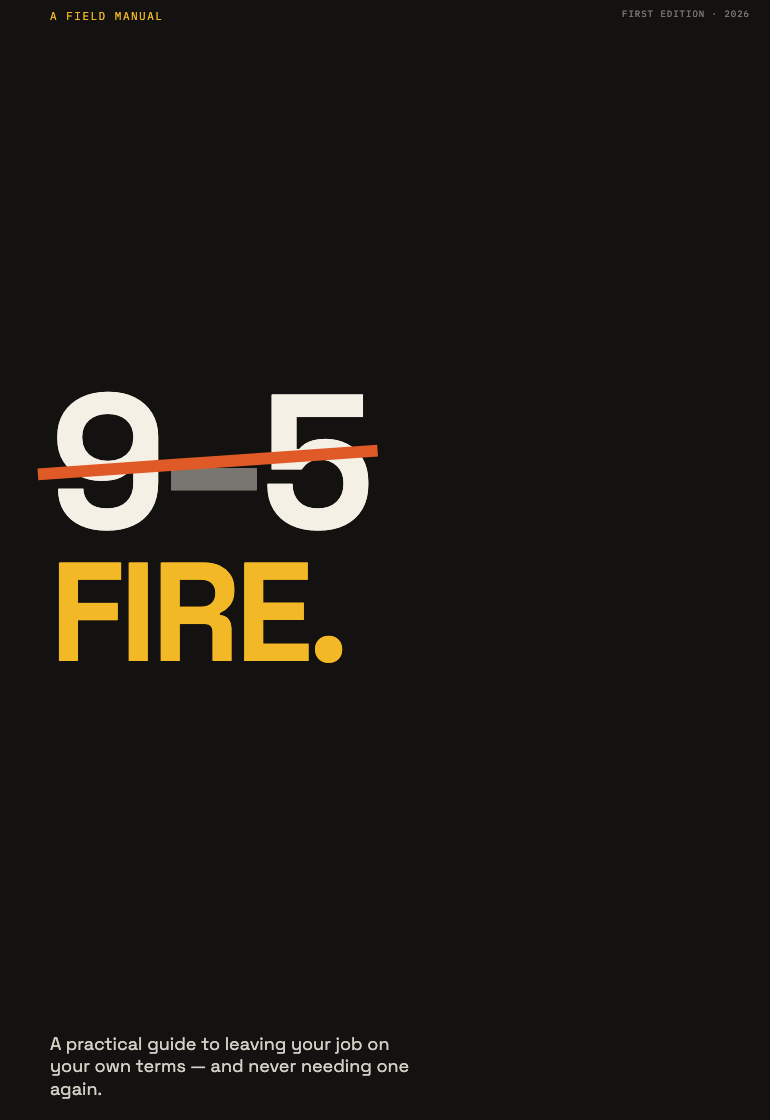
Escape the 9-5 with FIRE
You just ran the numbers. The number is the easy part.
The gap between your coast number and the day you both actually retire is measured in decades. A lot can drift in that time. The book covers the moves that keep the plan on track and the traps that reset it, in 36 pages with no fluff.
Instant download, both PDFs. 14-day guarantee. Read the full table of contents →
FIRE Planning Workbook
You found your number. The Workbook shows you how to keep it through the tax maze.
It's the Google Sheet you'd build yourself if you had a CPA and a free month.
Not sure which? Start with the $27 book. The workbook will still be here when you finish it.
Coast FIRE for couples: one portfolio, two timelines
Coast FIRE for couples works on household math. The spending you retire on is shared: one rent or mortgage, one insurance bundle, one grocery bill. So the target is a single number, computed from what your household spends in a year, not from two separate single-person budgets.
That's also why running the regular Coast FIRE calculator twice and adding the results usually misses. Each single run wants its own retirement age and its own split of the spending, and an age gap pushes the two answers apart. The honest version is simpler: one joint portfolio, one shared retirement year, and both ages back as output.
How the math works: household FIRE number = shared annual spending ÷ withdrawal rate. The coast number discounts it by your expected return for every year until the paychecks stop: Coast number = FIRE number ÷ (1 + return)years. Money is fungible between the two of you; whose account it sits in changes taxes, not compounding.
Why the calculator asks for years, not a retirement age
With two ages, "retire at 65" is ambiguous: whose 65? A shared count of years is exact. Enter how many years until you both want work to be optional, and the calculator reports the age each of you will be when the portfolio is scheduled to arrive.
Staggered exits are common, and the model stays honest about them: if one of you keeps working and contributing past that date, the real outcome beats the projection. Enter the years until the first exit and treat the answer as a conservative floor.
Everything runs in your browser as you type. No account, no server, and your numbers never leave the page.
Household coast numbers by years remaining
The table assumes $60,000 in shared annual spending and a 4% withdrawal rate, which makes the full household FIRE number $1,500,000. The right column reruns the same math at a 5% real return, the inflation-adjusted second run the FAQ below recommends.
| Years until retirement | Coast number at 7% | At 5% (real) |
|---|---|---|
| 10 | $762,524 | $920,870 |
| 15 | $543,669 | $721,526 |
| 20 | $387,629 | $565,334 |
| 25 | $276,374 | $442,954 |
| 30 | $197,051 | $347,066 |
| 35 | $140,494 | $271,935 |
What this calculator assumes (and what it leaves out)
The model treats your household as one unit: a single joint portfolio, no further contributions after today, and one constant return until the shared retirement year. Taxes, investment fees, account types, and government benefits are not modeled. It also skips the hard scenarios that hit couples specifically, like divorce or one partner dying early. A real plan should survive a stress test on both.
Sources: William Bengen's 1994 study in the Journal of Financial Planning and the 1998 Trinity Study. Last reviewed: July 25, 2026, formulas verified against the single-person coast calculator.
Frequently asked questions
Should couples use one FIRE number or two?
One. Retirement spending is mostly shared, so the target follows the household budget, and a joint portfolio compounds as one pot regardless of whose name is on which account. Two separate numbers make sense only if you genuinely plan two separate financial lives.
What if we want to retire in different years?
Enter the years until the first exit. That gives a conservative answer: in reality the partner who keeps working usually keeps contributing, so the portfolio lands higher than this no-more-contributions model projects. If the gap between your exits is big, run it both ways and plan between the two results.
Why does the calculator ask for years instead of a retirement age?
Because with two ages, a target age is ambiguous. A count of years pins one shared date, and the calculator reports what age each of you will be when it arrives. Age only matters on the withdrawal side, where the younger partner's longer horizon argues for a more careful withdrawal rate.
What about Social Security or a pension?
Not modeled. Benefits reduce the spending your portfolio must cover once they start. The simple honest adjustment: subtract expected annual benefits from household spending and rerun, then remember the portfolio has to bridge every year before the benefits begin.
We have a big age gap. Whose age matters?
For growing the money, neither: the years until retirement drive the compounding. For spending it, the younger partner's: the portfolio has to last their full horizon. With a 10-year gap, consider testing 3.5% instead of 4% in the withdrawal slider, and check the survival odds in the safe withdrawal rate calculator.
Who runs this site?
Still one person, me, Jonas. This couples page exists because the search data showed people kept looking for it and the single-person version couldn't answer honestly. The calculators are free, there's no login, and what you type stays in your browser. A $27 ebook and a $67 planning workbook keep the site running. I'm not a financial advisor; the about page has the longer story.
Running the numbers solo?
The single-person version works from your age and a target retirement age instead.
Open the Coast FIRE Calculator →